
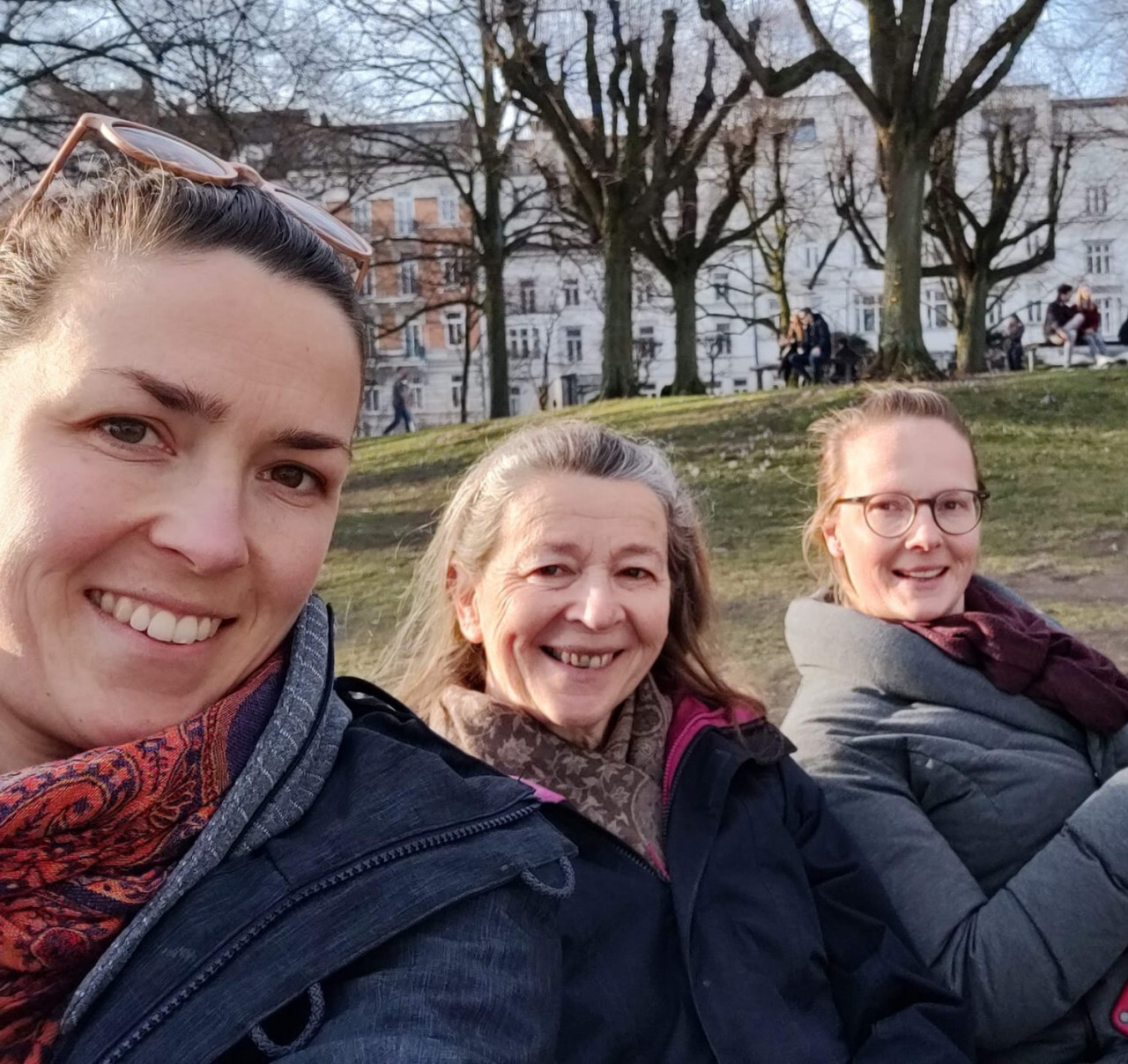
“If you share everything, you move forward faster.”
Wieteke van Zuure & Nanke den Daas
16-5-2024
Since 2019, Nanke Den Daas and her daughters Wieteke and Lonneke Zuure have been running an impact-investment Family Office together. The three women invest with a focus on regenerative agriculture and water, both in funds and directly, inspired by various wisdoms and backgrounds. In addition, Nanke is also the Chair of Pymwymic’s investment committee. Nanke and Wieteke share their story.
How did you start investing together?
Wieteke: Five years ago, my mother suddenly said to my sister and me: ‘We’re going to sell grandpa’s companies, so there will be money available.’ Then she asked us what we wanted to do with it. I was never really involved in the family business or interested in investing. However, there was always a strong focus on sustainability at home. So my first reaction was: ‘Let’s do something good with this money!’ That’s when we started to explore what that could mean.
Nanke: When the money became available, I realized that I wanted to involve my children in the next steps. I wanted to do something together with this money.
And impact?
W: After we decided to invest the money, I first had to learn how the financial world worked. I had always had an aversion to it before. But then I met Maarten from Pymwymic, and his way of thinking about finance immediately appealed to me. And after attending some PYM gatherings, I discovered that there are also nice people in the financial world who want to do good with their money! After discussing it together, the three of us started our impact portfolio.
What is your background, and how do you use it for your impact work?
N: I trained as a veterinarian and worked for years in R&D in the cattle industry, so I come from a technical background. In addition, I also gained financial and management experience in our family business in the recreation sector, mainly marinas. I learned a lot about water there, and that was actually the eye opener that made me want to focus on this area. And so it happened; ‘SeaQurrent’ became our first investment. SeaQurrent is a new type of hydropower that uses tides instead of height differences. They are now conducting their first tests on Ameland.
W: I am a biologist by training, so I naturally think in ‘ecosystems’ and feel that one of the biggest problems in the world is the disconnect between nature and humans. We are also animals ourselves and are not above nature. Changing our food system is where many things come together: it’s where humans can (re)connect with nature.
And what are the big differences?
W: First of all, in biology experiments you get quick results. Impact investing has a long horizon. Also, the community is very different. When I was doing my PhD, I realized how little scientists collaborated. Everyone was so focused on securing their own funding. The impact world is much more open. I especially noticed this when I started participating in Next Gen programs, where I not only gained knowledge but also found connection with peers with whom you can talk in a safe space about inheriting money and what you do with it.
N: I was very surprised to come across something like PYM. It’s so valuable and unique how many ideas are shared.
What does multigenerational impact investing look like for you?
W: For us, it has been a unifying experience. Even though things need to get done, we always make sure there is time for the person. This mission also ensures that we spend time together as a trio. Otherwise, we wouldn’t have had that.
N: I think it’s important that when you take such a step together, you all have different life experiences and are already independent. Only then can you really talk to each other as individuals with your own ideas and opinions.
What has been your greatest success so far?
N: I always want to know what’s happening everywhere, so for me, success is about learning, not about results. I think this is an important starting point when you’re building a portfolio.
W: For me, it’s the investment in New Foundation Farms – via TONIIC – a company in the UK that wants to create a food hub to help farmers who work regeneratively. I brought them in myself, and the success for me is that I dared to do this with my new knowledge.
How did you experience the PYM Impact Days this year?
W: It was my first time. What stuck with me was that space was made for the feminine. Without saying that the masculine is ‘wrong’, a balance was sought.
N: We attended both days – the Family Day and the Investor Day. What stayed with me was how much attention there was for the wisdom contained in experience; in cultures that are close to nature, for example with a shaman from Greenland. When I did my PhD in the 1990s, one of my theses was already that we hardly ever return to that. I still believe we need to find more balance there: old and new wisdom.
What advice would you give to young/starting impact investors or families who want to start together on this new path?
W: Keep talking to each other, have open conversations, and listen a lot. See this step as an opportunity and allow each other this chance.
N: You’re allowed to make mistakes and give each other the chance to make mistakes. That’s what everyone learns the most from.
W & N: The more independent you are from your parents, the easier the conversations will be.
Which books are your favorite sources of inspiration?
N: ‘The Nutmeg’s Curse’ – written by Amitav Ghosh and ‘The Risks of Thinking – The Encounter between Indigenous Spirituality and Technology’ by Jaap Breeveld.
W: ‘An Immense World – How Animal Senses Reveal the Hidden Realms Around Us’ by Ed Yong. ‘The More Beautiful World Our Hearts Know is Possible’ by Charles Eisenstein, ‘The Soul of Money – Transforming Your Relationship with Money and Life’ by Lynne Twist, and ‘Braiding Sweetgrass’ by Robin Wall Kimmerer.
Which family values are reflected in your impact investments?
N: In the family I grew up in, perseverance was key. And that was also one of the names of our companies! Now, for us, I think it’s: independence, curiosity, and supportive leadership; giving trust to others so they can develop themselves.
W: In our family, I also try to develop gentleness, and perseverance is less important. Curiosity and supporting each other are also at the core for us.