
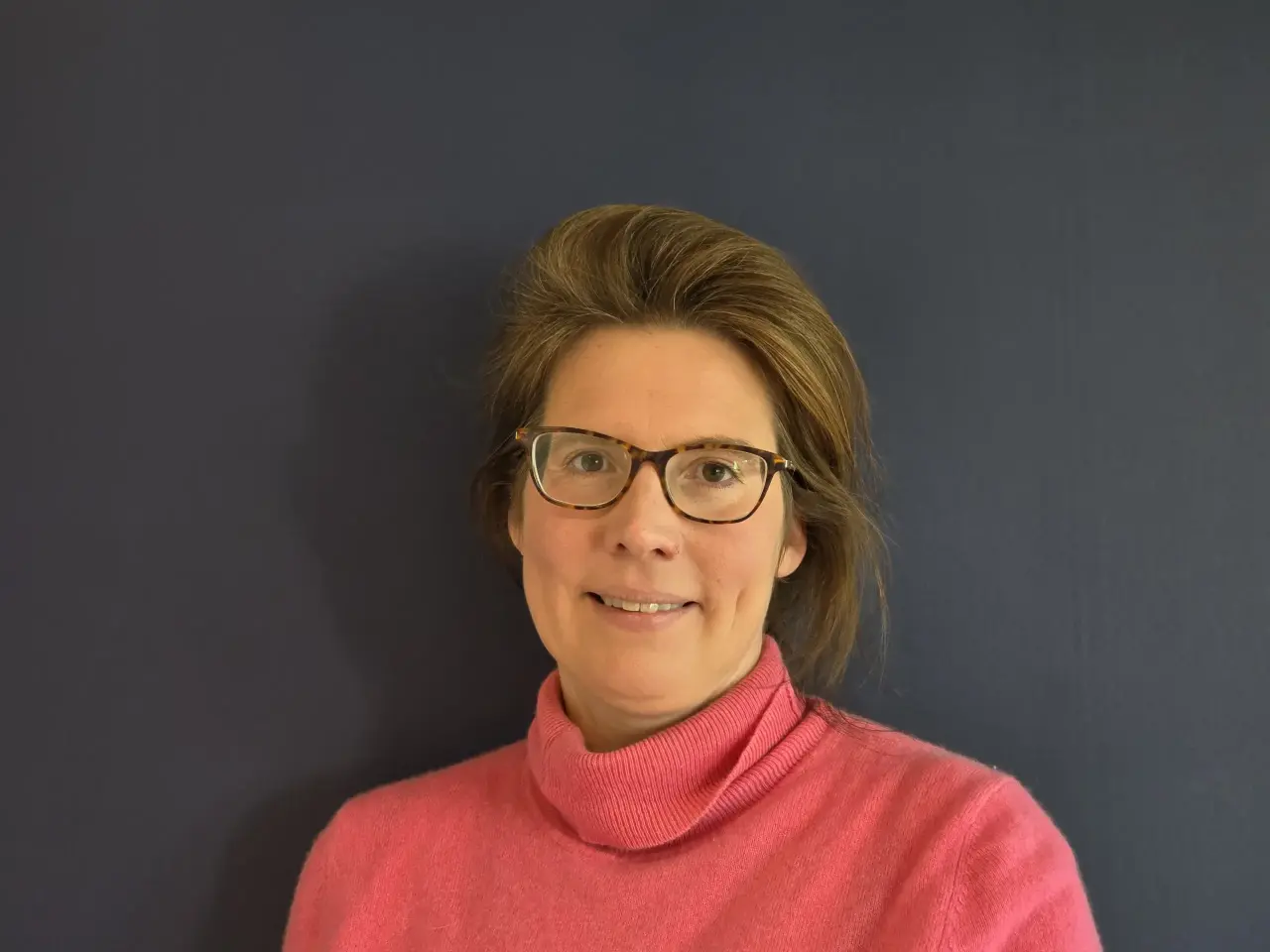
"I love witnessing the moment people discover just how much they can set in motion with their wealth."
Ruth van de Belt
15-10-2026
By Nina Wichstrøm
Ruth van de Belt is an impact investor and the founder and CIO of Kosmos Impact. As an angel investor, she backs Dutch start-ups in the bio-based economy, from seaweed to mycelium. She will soon be joining the board of PYM.
How did you get into impact? Was there a turning point?
Looking back, there were two important moments. I studied economics and econometrics, and wrote my thesis on happiness. My research showed that, after a certain amount, money doesn't create more happiness. I then went to work in the financial sector, where I found that, even at companies focused on sustainability, financial returns remained the priority. So I decided to go and work on a healthcare project in Fiji, and that changed everything. I saw the lack of adequate healthcare and education, especially on the remote islands. And I personally witnessed the effects of climate change, from coral bleaching to cyclones. After Fiji, I knew I wanted to work towards positive change.
What is impact to you, and what isn't?
For me, impact is about intentionality. A company needs to deliver products or services that strengthen the social foundation, or help us stay within planetary boundaries. That's different from ESG, which is about processes: are there, for example, enough women on the board, and is the pay gap between the top and the average employee not too big? Of course that is important too, but it is not 'impact' to me. The team's intentions need to come through in everything, from the product and the investment process to how they plan to exit.
How important are returns?
That is a personal choice and preference. Impact comes in three flavors. Impact with a market-rate return. Catalytic capital, where you accept a lower return or a much higher risk. And philanthropy, where you don't expect any return at all. So investing in impact doesn't have to mean lower returns; it just depends on how you divide your money. Most of my own money is in impact investments with a market-rate return. I also do some angel investments, which I've accepted could be write-offs.
What is your personal investment focus?
The circular and bio-based economy. I believe we must, and can, use far fewer virgin raw materials. I look for companies higher on the R-ladder that design their products with a circular mindset. For example, I invested in a start-up that makes color pigments from seaweed.
Earlier in my career, I ran a listed impact fund at Triodos, but my focus is now on unlisted investments, because I believe that's where you can make the most impact. In venture capital and venture debt, you find the companies building a completely different economic system. On the listed side, it's more about making the current system more efficient. That's needed too, but personally I'd rather finance a new system.
Which investment are you most proud of?
I love investments that build entire value chains. For example, when spices harvested in Africa aren't exported straight away, but dried, cut, and packed on site. Or coffee beans that are roasted locally. That way more value stays on the continent and it trickles down through the whole of society. It is important to do this through a fund or spread across several companies, so that one setback doesn't bring everything down.
As an angel investor, my focus is more local, because you give more than money. Closer to home, my network is more relevant, and there are fewer cultural differences.
What would you advise new impact investors to do, or not to do?
Start with something you're passionate about and see how it goes. I always call it a journey, because it's such a learning process. Many people start with broad funds and, five years later, wonder why. But you don't know everything from day one, so you often need that breadth to discover what really matters to you.
It helps to be part of a network like PYM, where you can exchange ideas with others in a similar position. The PYM Impact Circles, for example, can also help you take a first step. The circles cover very practical questions, such as which funds are out there and how to assess a fund manager. Personally, I wouldn't start with direct investments; it's a lot of work.
What themes do you come across around wealth and impact?
I notice that many people, especially women, don't feel at home in the traditional finance world. Conversations at the bank are about the wrong things, or are held in the wrong way. They're often approached from the head, while for many people the heart matters just as much, especially when they are considering impact. Many families are also struggling with the coming wealth transfer. The next generation often has different ideas about how it should be managed, and they want to talk about it. Parents and grandparents like to invest to gain something, while younger people focus more on investing to prevent something, like further inequality or harm to the planet. A good return is welcome, but not a requirement for them.
Which books are inspiring you at the moment?
'Entangled Life' by Merlin Sheldrake, 'Dit is geen crisis' by Hans Stegeman, and 'Verhalen voorbij de toekomst’ by Frits Verhoef.
You are about to join the board of PYM. What is the value of PYM for you?
We share the same mission: mobilizing more capital for a better world, for people and planet. As a society, we hardly talk about money. So when you have a lot of wealth, it often comes with shame, discomfort, and loneliness. There is a lot of value in sharing your journey. At PYM, you can say out loud how you feel and learn from each other. I love witnessing the moment people discover just how much they can set in motion with their wealth.