
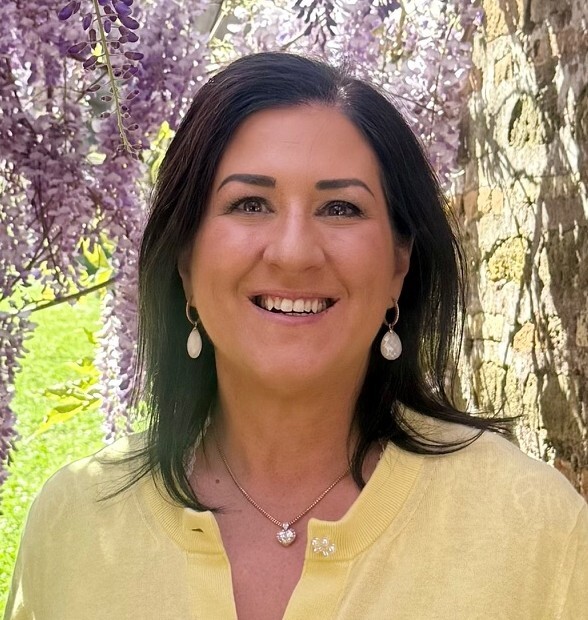
"I refuse to make concessions on financial returns."
Naomi
29-6-2026
Naomi is the sole grandchild and third generation in her family business, which focuses on mobile cranes and logistics real estate. Some years ago, she discovered impact investing and started sector-agnostically. She now has a dedicated impact team, with a focus on the built environment.
How did your impact journey begin?
I was looking for my own division within the family business, which also has a philanthropic arm. I was then introduced to impact investing, and had a real lightbulb moment. I realised sustainability was always in our DNA, we just called it something else. I noticed how many people used very rigid frameworks from the beginning, but we wanted to start completely open. We learned a lot from that, including working with funds that let us look under the hood. Pymwymic was very open, for example.
What is your experience with PYM?
A few years ago, I participated in a PYM circle; in this case, a women's group with active and knowledgeable impact investors. It was a very valuable experience and an inspiring exchange! On Tuesday 7 July at 20:00 I will be sharing more details about my impact journey and my investments during a PYM webinar: Intro to Impact Investing.
How did you end up investing in the built environment?
Our business is very niche, and I believe you ultimately need to end up in a niche, but I needed to explore first. So we invested what we called 'please don't blow it away capital' across different sectors. It was our learning capital. We ultimately came back to the sector we know best. The truth is, you don't know what you don't know, which means you can't ask the right questions. So I'm very grateful that, in the end, I ended up with the obvious choice, where I can use my network and know-how built over years of experience. However, had I gone straight there, I would have missed a few mistakes that were worth making.
What do you want to change in the sector?
The built environment is the most conservative sector in the world. But it's also clear why. A building needs to last at least 50 years, and for most people a home is their most prized asset. People don't want to take risks with new materials that haven't been tested for durability. I don't think you can change that mindset, so you have to invest in companies that make seemingly small steps but have major impact. We invested, for example, in a company that offers 'enveloping' to large landlords via AI-driven digital scans. (Enveloping is the process of improving the outer shell of a building to make it more sustainable) They identify the exact costs and payback period, showing how sustainability ultimately pays off financially. In the end, most people only change if it improves their bottom line.
Do you invest in new materials?
We have invested in both new materials and technologies that improve existing materials. We invested, for example, in UBQ, which turns waste into a new raw material that can be mixed with virgin plastic or sometimes replace it entirely.
We also invested in Converge: an enabler for green cement, and Everox: a transformer of waste concrete into high-quality drop-in substitutes for cement, aggregates, and sand. Concrete consists of only 20% cement, but all the CO2 comes from the cement element. Rubble is currently ground down for roads and foundations as a form of recycling, but this company does much more than that; they upcycle by creating a much higher-grade end product, all whilst using the heat released during the process. Cement doesn't have the same feel-good factor as AI for drug discovery, for example, until you understand that cement is responsible for 8% of global CO2 emissions. So if cement were a country, it would be the world's third-largest CO2 emitter. This company enables a 15% reduction in cement-related emissions. That sounds modest, but a 15% reduction in cement CO2 is equivalent to almost 50% of global aviation emissions.
How do you see the future of impact investing?
I see a lot of idealism in impact, but I sometimes miss the realism. I understand that it's time for action, but I don't feel like activism alone is going to get us there. This is why I refuse to make concessions on financial returns. Not because I need more money, but because I want to prove that impact investing works. Impact investing is growing fast, but still represents only about 1% of globally professionally managed assets. For asset managers to recommend it to clients and to attract institutional money, it needs to be lucrative. That's where we can create change at scale. I think returns need to be in the 10-15% range because venture capital requires strong returns. Only then can we convince the world that impact investing is not 'fringe': we can make money and be responsible.
Are your philanthropic endeavours connected to your impact investing?
No, they are separate buckets with a different focus. That was also the first question I got from my family: if we do impact, will we stop our philanthropy? We didn't, and actually, the philanthropy bucket has only grown since we started with impact. We focus our philanthropy on education, as an ode to my grandfather, a Holocaust survivor, who always said, " They can take everything from you except two things, your skills and your knowledge."
Do you have tips for starting impact investors?
- There is no blueprint. I believe people should enjoy the experience. There are many different ways to approach impact investing, and there is a whole range of problems we need to solve. Find out where you have additionality and where your passion lies. That way, you contribute far more than just capital.
- Don't underestimate the importance of the team to a company's success. You need to know whether you can trust them for the next three to five years to achieve what they set out to do. We are always minority shareholders, so you can't really change the team.
- Don't get too caught up in defining your 'why' or your 'theory of change'. It's good to set frameworks, but ultimately you learn most by doing.